Wall Vent Covers: Which Type for Exhaust, Intake and Dryer Walls?
"Wall vent cover" is used for two different products: the cap on the outside wall where an exhaust or intake duct ends, and the register or grille that covers a duct opening inside a room. Buyers who order one when they need the other end up with returns. This guide sorts wall vent covers by the job they do, then gives the damper, screen, size and material rules for each.
Quick Answer
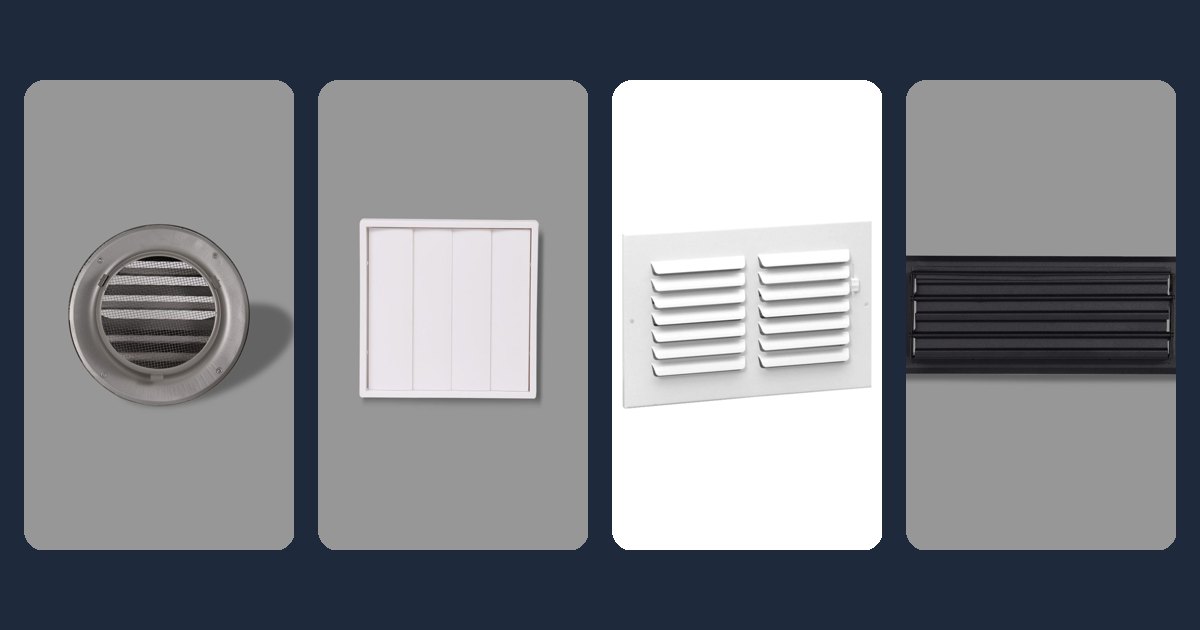
Choose a wall vent cover by what the duct behind it does. Powered exhaust (bathroom fan, range hood, dryer) needs an exterior hood with a backdraft damper: gravity flaps or louvers that open under fan pressure and close when the fan stops. Dryer terminations must not have a screen (IRC M1502.3) and need a 4 inch duct. Fresh-air intakes need the opposite: a fixed louver or hood with a pest screen, never an outward-opening exhaust flap. Interior wall openings take a supply register (with damper) or a return grille (no damper), sized by the opening, not the face. For exposed outdoor caps, stainless steel generally lasts longer than galvanized steel or ABS plastic (use 316 near salt spray); ABS is fine on sheltered walls.
Key Takeaways
- Exterior caps are sized by the duct they connect to (usually a round spigot), interior covers by nominal opening size. Mixing the two methods is the most common ordering error.
- Exhaust = backdraft damper, no screen on dryers. Intake = screen, no outward-opening flap. A cover that does both jobs well does not exist.
- IRC M1502.3: dryer exhaust terminations need a backdraft damper and no screen, and, unless the dryer manufacturer specifies otherwise, must sit at least 3 ft from any opening into the building.
- Our catalog covers both sides of the wall: 7 round metal vents (5 in stainless steel), 7 ABS plastic vents, 66 sidewall registers and 13 return air grilles. MOQ starts at 100 pcs per model.
In This Guide
- 1. Wall Vent Covers by Job: The Selection Table
- 2. Exhaust Wall Vent Covers: Bathroom Fans and Range Hoods
- 3. Dryer Wall Vent Covers: The Strictest Rules
- 4. Intake Wall Vent Covers: Screens, Not Flaps
- 5. Interior Wall Vent Covers: Registers, Return Grilles, Decorative
- 6. Materials: Stainless, Galvanized, ABS, Powder-Coated Steel
- 7. Ordering Wall Vent Covers in Bulk: What to Put in the RFQ
- 8. FAQ
1. Wall Vent Covers by Job: The Selection Table
Every wall vent cover answers three questions: should air be able to flow back in when nothing is running (damper or not), what has to be kept out (rain, birds, insects, lint build-up), and what does it connect to (a round duct outside, a rectangular boot or opening inside). Start with the row that matches your duct.
| Job | Cover type | Backdraft damper | Pest screen | Sized by | Our range |
|---|---|---|---|---|---|
| Bathroom fan exhaust | Louvered wall cap or hood | Yes | Optional (per fan maker) | Duct diameter, usually 3–4 in | Round metal vents, ABS vents |
| Range hood exhaust | Hood with gravity flap | Yes | Avoid fine mesh (grease) | Duct size, commonly 6 in+ round | Stainless steel hoods |
| Clothes dryer exhaust | Wall cap with flaps or louvers | Required (IRC M1502.3) | Not allowed | 4 in nominal duct | Caps without mesh (confirm per model) |
| Fresh-air / passive intake | Fixed louver or hood | No outward-opening flap | Yes | Duct diameter + free area | Screened stainless caps |
| Interior supply opening | Sidewall register | Volume damper (adjust, not backdraft) | No | Nominal opening, e.g. 10x6 | 66 sidewall registers |
| Interior return opening | Return air grille | Usually none | No | Nominal opening + CFM | 13 return grilles |
If you are not sure whether an interior opening needs a register or a grille, our grille vs register vs diffuser guide explains the difference in one table.
2. Exhaust Wall Vent Covers: Bathroom Fans and Range Hoods
An exhaust wall vent cover has one job when the fan runs (get out of the way) and another when it stops (seal the duct). The sealing part is the backdraft damper: a single flap, several flaps or light louvers that lift under pressure, or spring-loaded blades. Without it, wind blows cold air back into the bathroom and insects and birds treat the duct as shelter.
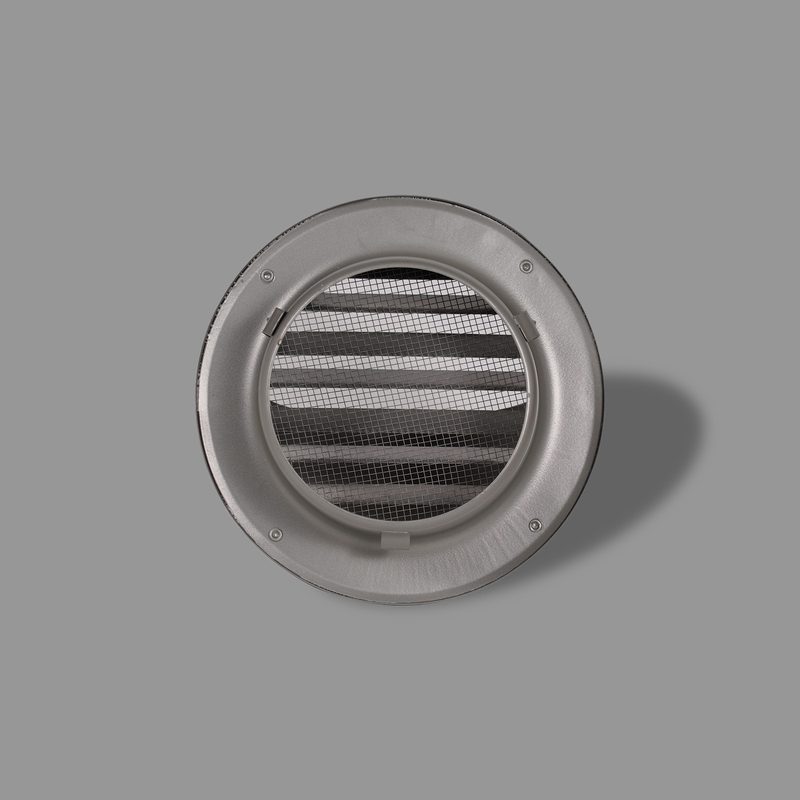
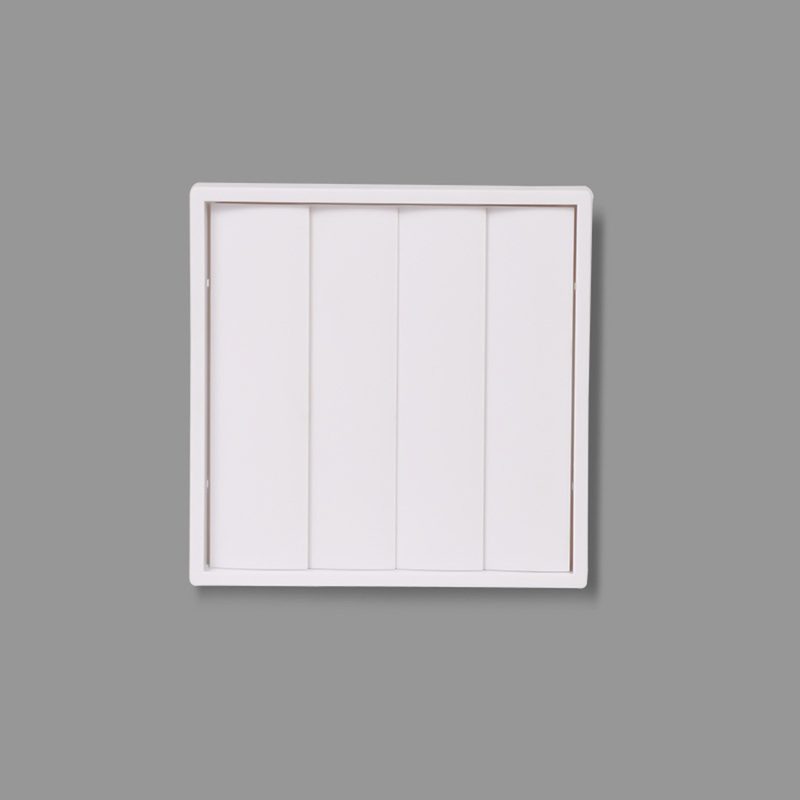
Bathroom fans usually exhaust through a 3 or 4 inch duct. A louvered cap with a pest screen is common here, as long as the fan manufacturer allows it, because bathroom exhaust carries moisture but little lint or grease. The screen still needs cleaning, so specify a cover where the mesh can be reached.
Range hoods move more air and carry grease. Ducts are commonly 6 inch or larger, and the hood manual sets the minimum. Fine mesh at the outlet collects grease and chokes the fan, so use a gravity-flap hood without a fine screen. Where a home has a fuel-burning appliance that is neither direct-vent nor mechanically drafted, IRC M1503.6 requires makeup air for kitchen exhaust above 400 CFM. That is a system decision, not a cover decision, but it is worth knowing before you spec a high-CFM hood cap.
On exposed walls, a dome or bull-nose hood that projects from the wall sheds rain better than a flat louvered face. On sheltered walls under eaves, a flat cover is neater and enough. For the damper itself, our backdraft damper guide covers gravity, spring-loaded and inline options if the wall cap alone does not stop drafts.
3. Dryer Wall Vent Covers: The Strictest Rules
A dryer wall vent cover looks like a bathroom fan cap, but the code treats it differently because dryer exhaust is hot, wet and full of lint. Under IRC M1502.3 the termination must:
- Have a backdraft damper. Open pipe ends are not allowed.
- Have no screen. The code text is direct: screens shall not be installed at the duct termination. Lint builds up on mesh, restricts airflow and is a fire hazard.
- Sit at least 3 ft in any direction from openings into the building, such as windows, doors, air intakes and vented soffits, unless the dryer manufacturer's instructions specify the termination location.
The duct behind it is 4 inches nominal in diameter (IRC M1502.4.1), so dryer wall caps are bought with a 4 inch spigot. Pest control on a dryer vent therefore comes from tight-closing flaps or louvers, not from mesh. When you order dryer caps in volume, state "no screen" on the RFQ: many generic exhaust caps ship with mesh fitted. Our dryer vent cover guide goes deeper into dryer cap styles and troubleshooting.
4. Intake Wall Vent Covers: Screens, Not Flaps
Fresh-air intakes (ventilation air, HRV/ERV supply, combustion or makeup air openings) reverse the exhaust logic. An exhaust-style flap opens outward and would block incoming air, so intake covers use fixed louvers or an open hood with a pest screen. Where a damper is needed on an intake, it has to be one made and rated for inward airflow. The louvers and hood keep rain out; the screen keeps birds, rodents and large insects out.
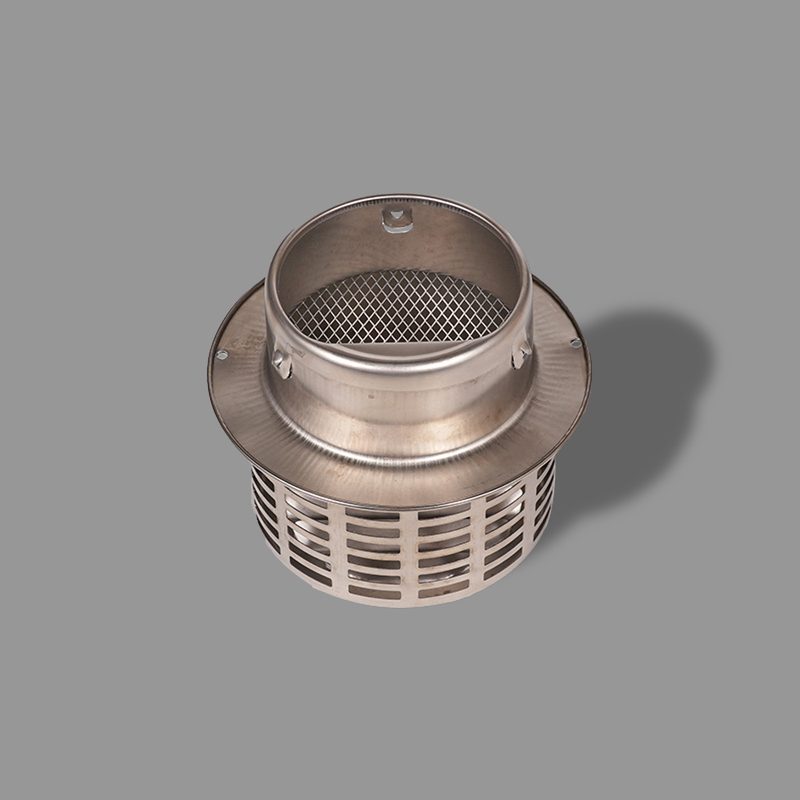
Two things matter more on an intake than on an exhaust cap:
- Free area. Louvers and screen both block part of the opening. An intake cover with a small net free area raises velocity, pulls in rain and makes the fan work harder. Ask for the net free area of the cover, not just the spigot size. For rectangular intake louvers, the method is in our fresh air intake louver guide.
- Position. IRC M1504.3 requires exhaust outlets to terminate at least 3 ft from gravity air intake openings, operable windows and doors, and at least 10 ft from mechanical air intakes unless the exhaust outlet is at least 3 ft above the intake. Plan intake and exhaust caps on the same wall with those distances in mind.
5. Interior Wall Vent Covers: Registers, Return Grilles, Decorative
Most homeowners searching for wall vent covers mean the plate on the inside of the room. In HVAC catalogs these are three families:
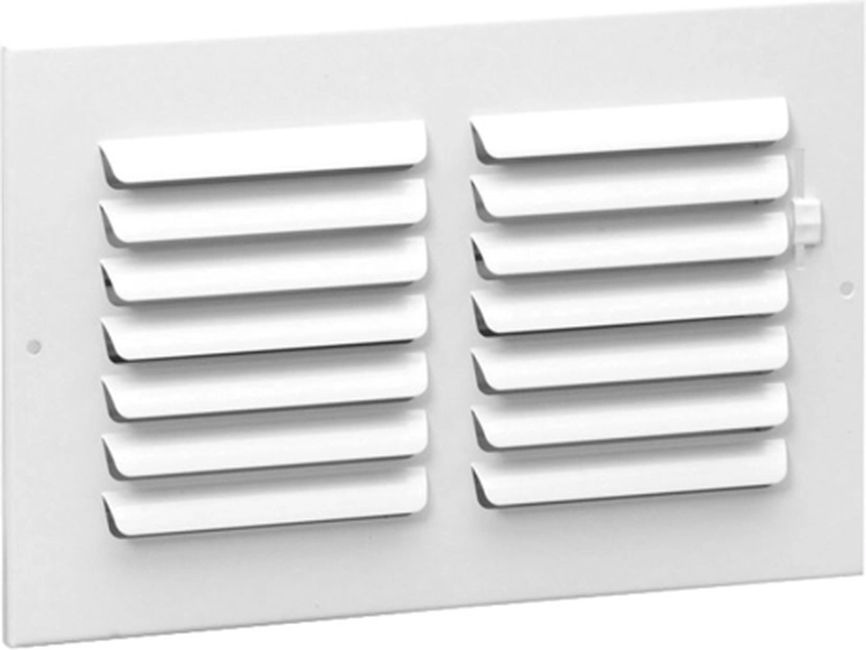
- Sidewall supply registers deliver conditioned air and have a damper (multi-shutter or opposed blade) to trim the flow. Curved blade faces throw air in one to four directions; double deflection faces let you set both vertical and horizontal throw. We make 66 sidewall register models in steel and aluminum, from the 302/A302 2-way curved blade to 92HVV double deflection with opposed blade damper.
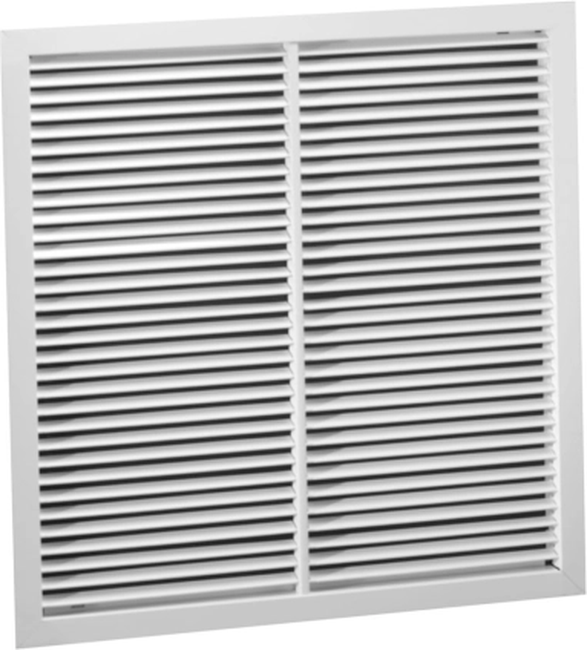
- Return air grilles cover the opening where room air goes back to the system. They normally have no damper, and they must be sized for the return CFM at low face velocity or they will whistle. Our return air grille types guide compares stamped fin, fixed bar, egg crate and perforated faces.
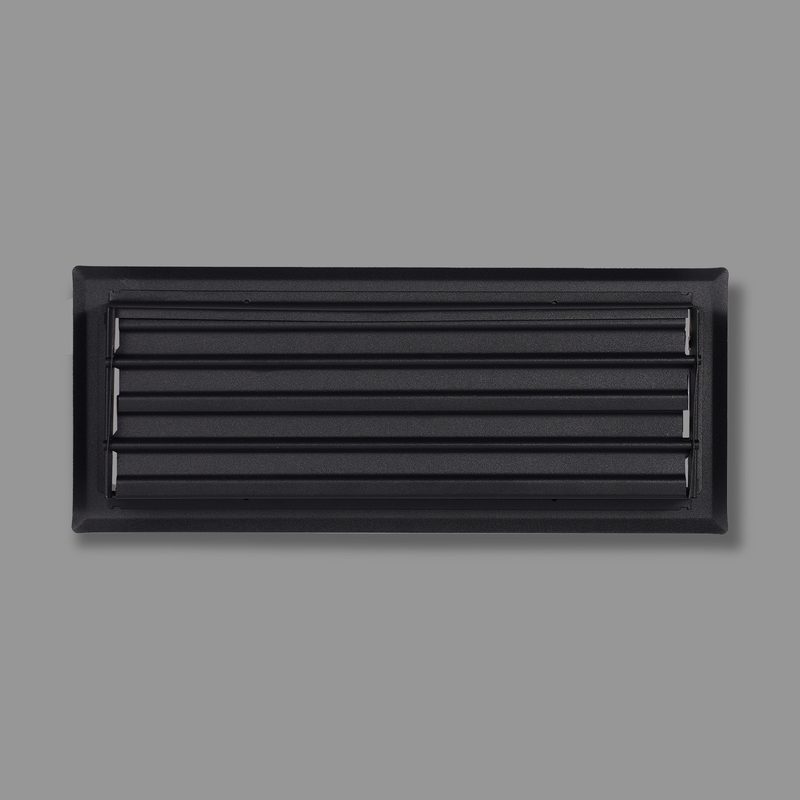
- Decorative wall vent covers replace a standard register face with a patterned or dark-finish one. Our laser-cut decorative registers come in matte black, satin nickel, antique brass and rose gold. Check their open area: a dense pattern restricts airflow more than a plain louver.
Interior covers are sold by nominal size, which is the duct opening, not the outside of the frame. A "10x6" register fits a 10 x 6 in opening and its face is larger by the frame margin on each side. Measure the opening behind the old cover, not the old cover itself. Magnetic covers, sold to close a register for a season, are a retail accessory rather than a wall vent cover in the HVAC sense; never fit one over a return grille, because a blocked return starves the system. For floor, ceiling and toe-kick openings, see our guide to the best HVAC vent covers by location.
6. Materials: Stainless, Galvanized, ABS, Powder-Coated Steel
| Material | Where it fits | Watch out for | In our catalog |
|---|---|---|---|
| Stainless steel | Exposed outdoor caps, kitchen exhaust | Highest unit cost; specify grade (304, or 316 near salt spray) on the RFQ | 5 of 7 round metal vents (2 specified as SS304) |
| Galvanized steel | Indoor round vents, sheltered outdoor use | Zinc coating wears; cut edges rust in humid climates | Steel disc valve |
| ABS plastic | Budget exhaust hoods, sheltered walls, rental stock | UV ageing and brittleness in cold; not near hot exhaust | 7 ABS plastic vents |
| Powder-coated steel | Interior registers and grilles | Use aluminum in bathrooms and humid rooms | Steel register and grille models; confirm finish per model |
| Aluminum | Interior registers in humid rooms | Softer face, dents if knocked | "A" models, e.g. A302, A650 |
A practical rule: outdoors and exposed, buy stainless (316 if salt spray is likely); outdoors and sheltered, ABS is acceptable; indoors, steel for dry rooms and aluminum for wet ones.
7. Ordering Wall Vent Covers in Bulk: What to Put in the RFQ
Distributors and contractors usually buy wall vent covers as a mixed order across sizes and types. A quote request that avoids back-and-forth includes:
- Job per line: exhaust, dryer, intake, interior supply or interior return. This decides damper and screen.
- Connection size: duct diameter and spigot length for exterior caps; nominal opening for interior covers.
- Damper and screen: flap, louver or none; screen yes/no and mesh opening. Write "no screen" for dryer caps.
- Material and grade: SS304, galvanized, ABS, steel or aluminum; colour or finish.
- Quantity per model and size, plus packaging (bulk carton or individual retail box).
MOQ for standard catalog items starts at 100 pcs per model, and standard items typically ship in about 25–35 days by sea ex-China from our Dongyang plant. The exact MOQ and schedule per model and size are confirmed in the quotation, and a list mixing round metal vents, ABS vents, registers and grilles can be sent as one RFQ. First-time importers should read our guide to sourcing HVAC parts from China before placing a mixed order.
Related Guides
- Dryer Vent Cover Guide: dryer cap styles, sizing and troubleshooting
- Fresh Air Intake Louver Guide: free area sizing for intakes
- Backdraft Damper Guide: gravity and spring-loaded dampers
- Return Air Grille Types: choosing the interior return cover
- Decorative Register Guide: patterns and finishes
Sources
- International Code Council, International Residential Code 2021: M1502.3 (dryer exhaust termination), M1502.4.1 (dryer duct size), M1503.6 (makeup air for kitchen exhaust over 400 CFM where non-direct-vent fuel-burning appliances are present), M1504.3 (exhaust outlet clearances to intakes and openings).
- Airwise product catalog: round metal vents, plastic vents, sidewall registers and return air grilles (model counts and materials as listed on this site).